Skip to content
02Print specifications

Four ways to lay a file down

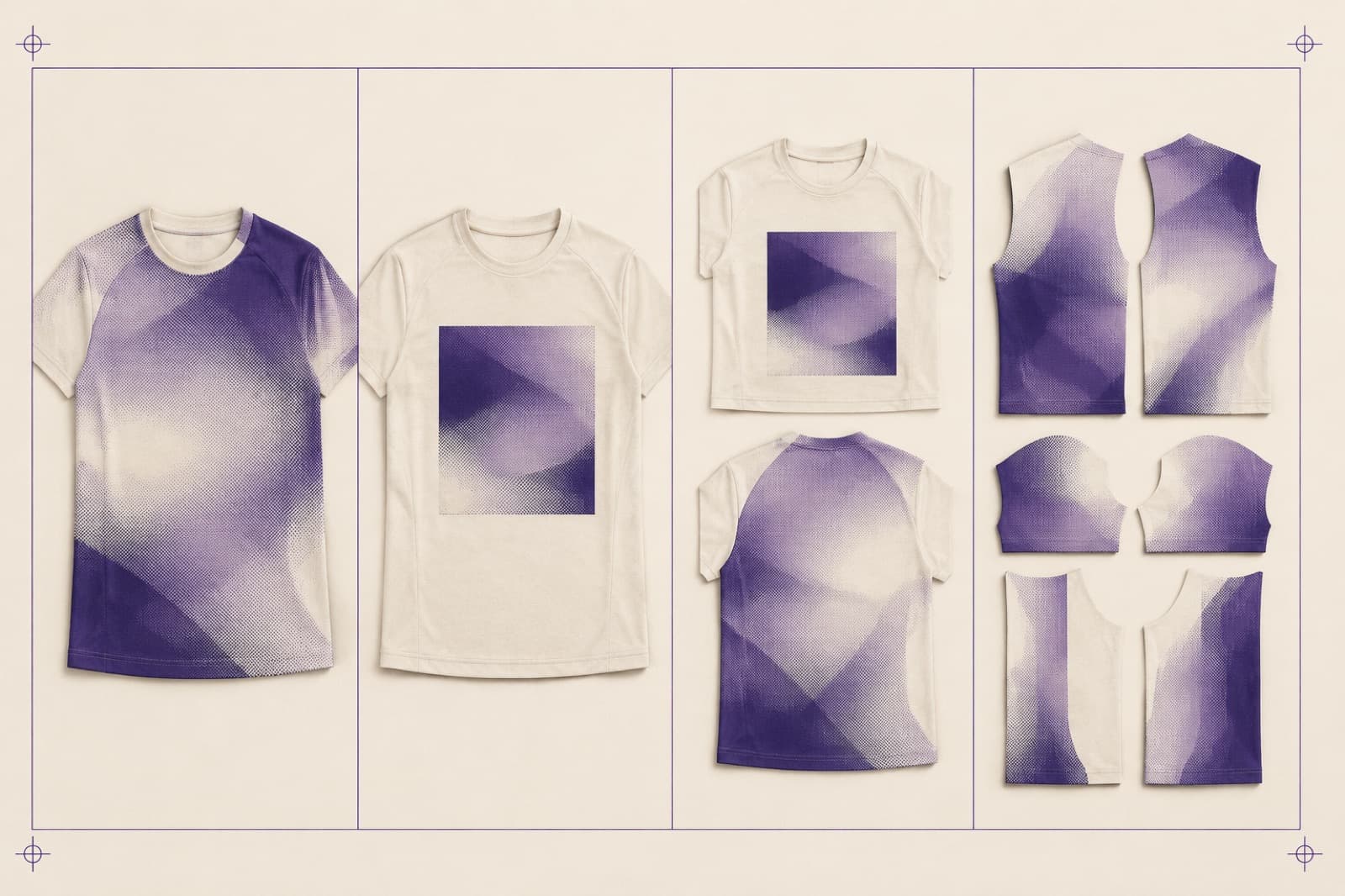
Printing is priced separately from the blank because printing is what you are actually buying. The four specs differ in how much of the piece they cover, how long they take, how many pieces they need — and, most importantly, how much the seams will show.

Lead time, end to end

Every order includes 1 working day for artwork review and 3 working days of base production, plus the spec surcharge below. Delivery is on top. Delivery and lead times.

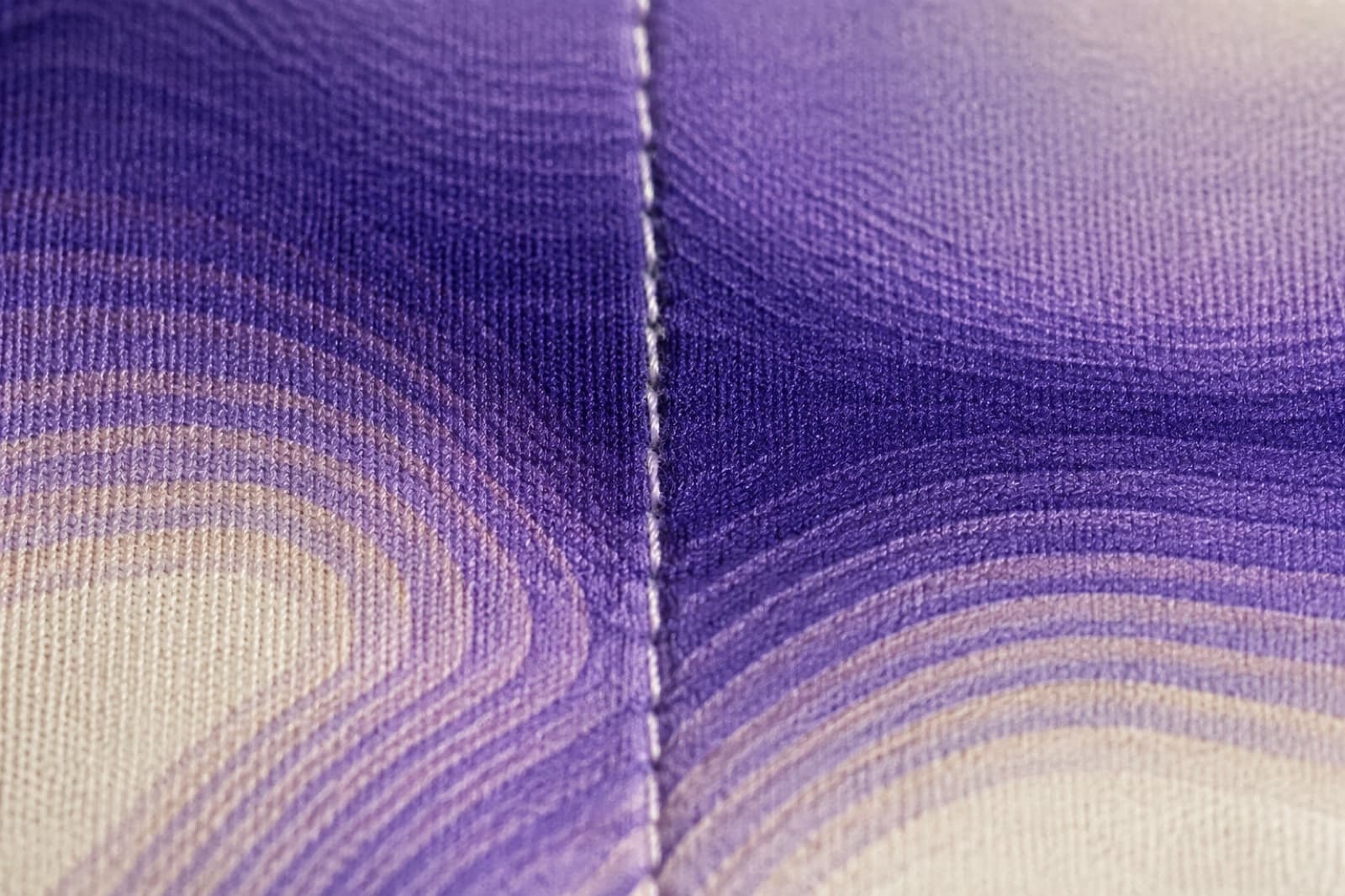
Macro photograph illustrating all-over printing on polyester.
A+€12.00 per piece

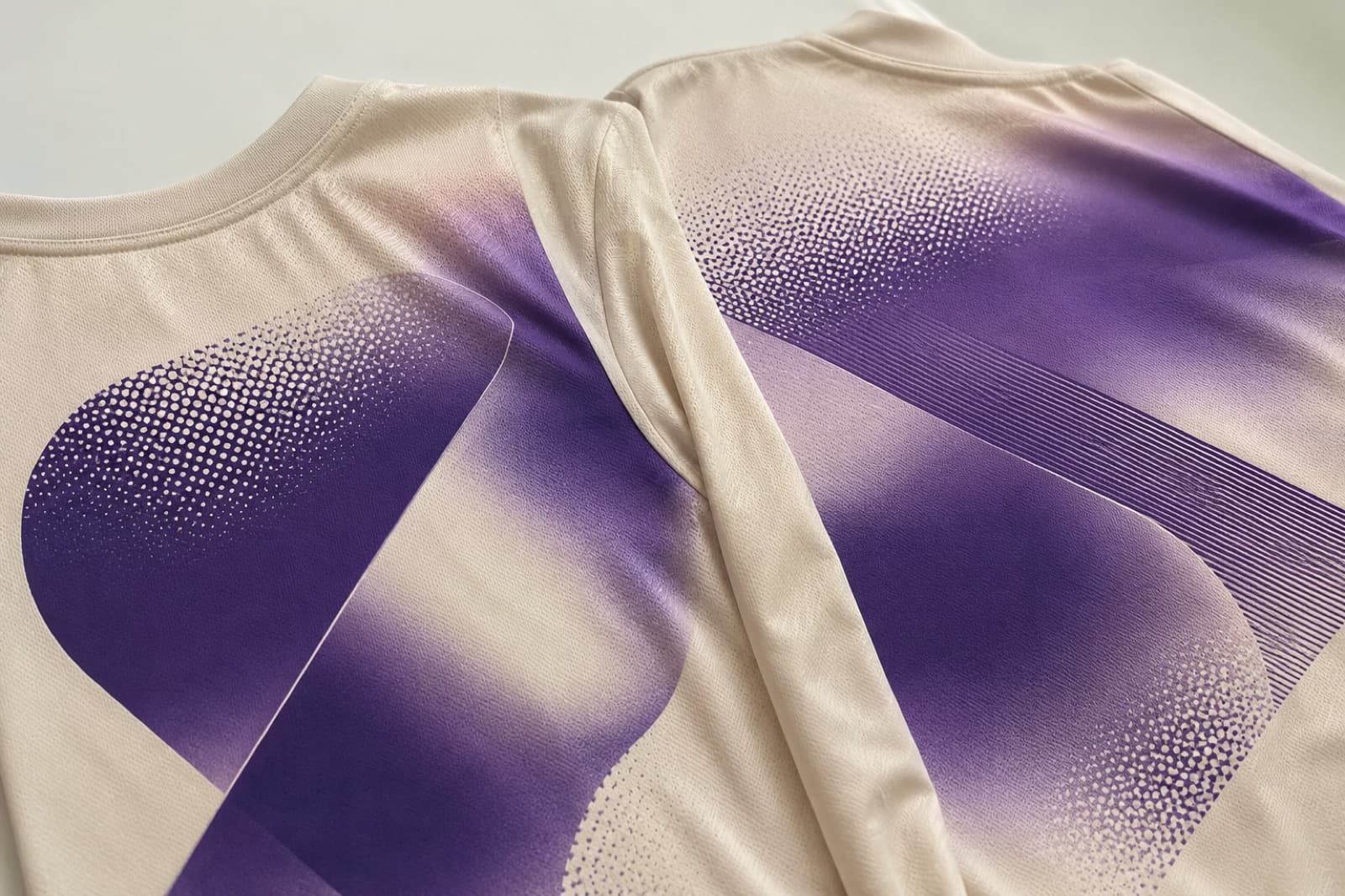
All-over

The file wraps the entire garment and runs off all four edges. This is what people mean by sublimation, and it is also where the process shows its limits most plainly.

Minimum
1 pcs
Added lead time
+35 d
Blanks
35/38

Seams — Most visible seam whitening of the four. The artwork crosses every seam, so every seam shows.
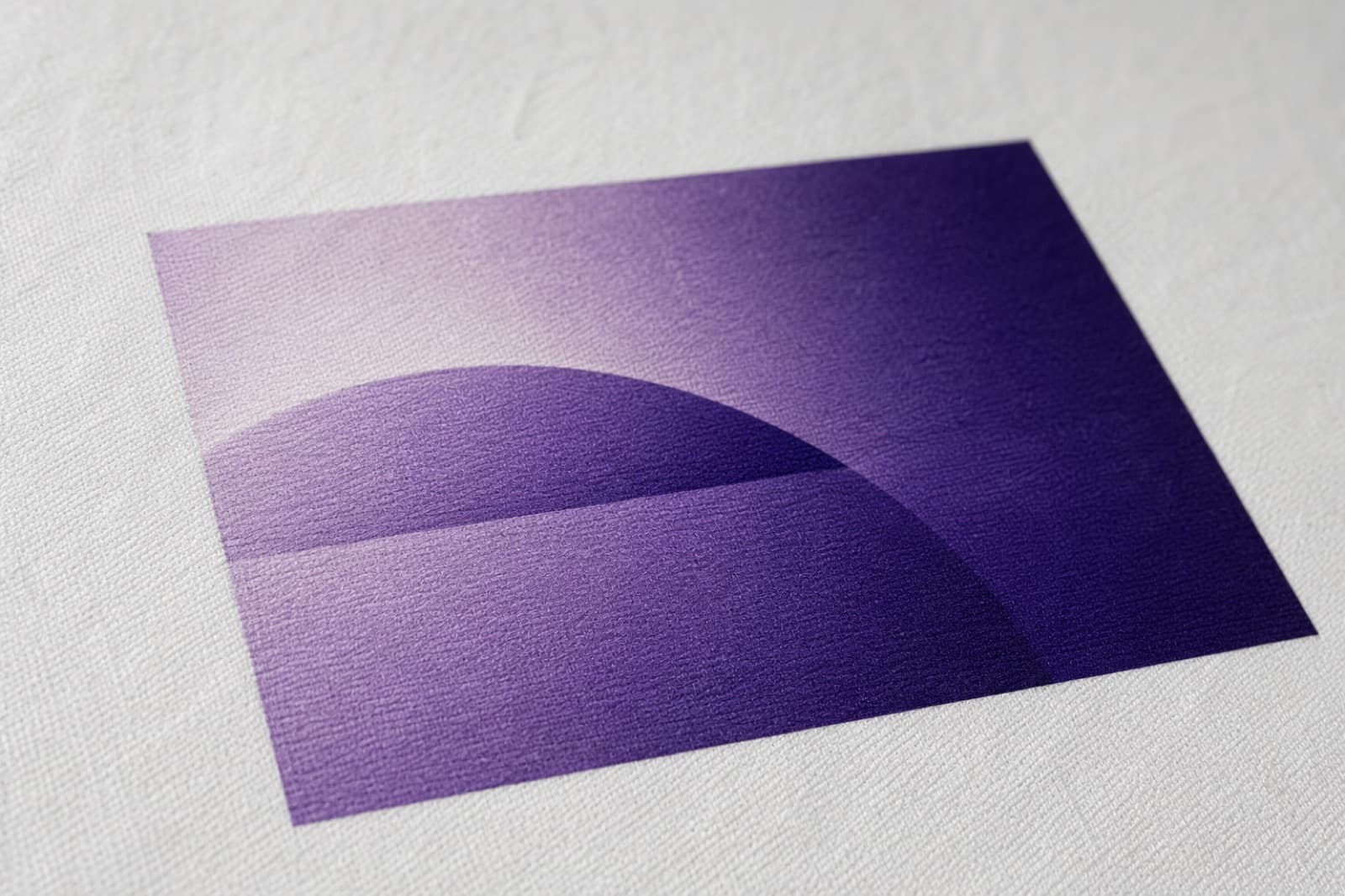
Macro photograph illustrating front panel printing on polyester.
B+€7.00 per piece

Front panel

A single defined area on the front, with plain fabric all around it. Cheapest, fastest and by far the most predictable result.

Minimum
1 pcs
Added lead time
+23 d
Blanks
37/38

Seams — Lowest seam risk of the four. The print sits inside the flat panel and touches no seam.

Macro photograph illustrating front + back printing on polyester.
C+€11.00 per piece

Front + back

Two separate flat areas, pressed in two passes. The shoulder seam between them stays plain, so nothing has to line up across it.

Minimum
1 pcs
Added lead time
+23 d
Blanks
28/38

Seams — Low seam risk. Both areas sit inside flat panels; shoulders and sides stay unprinted.

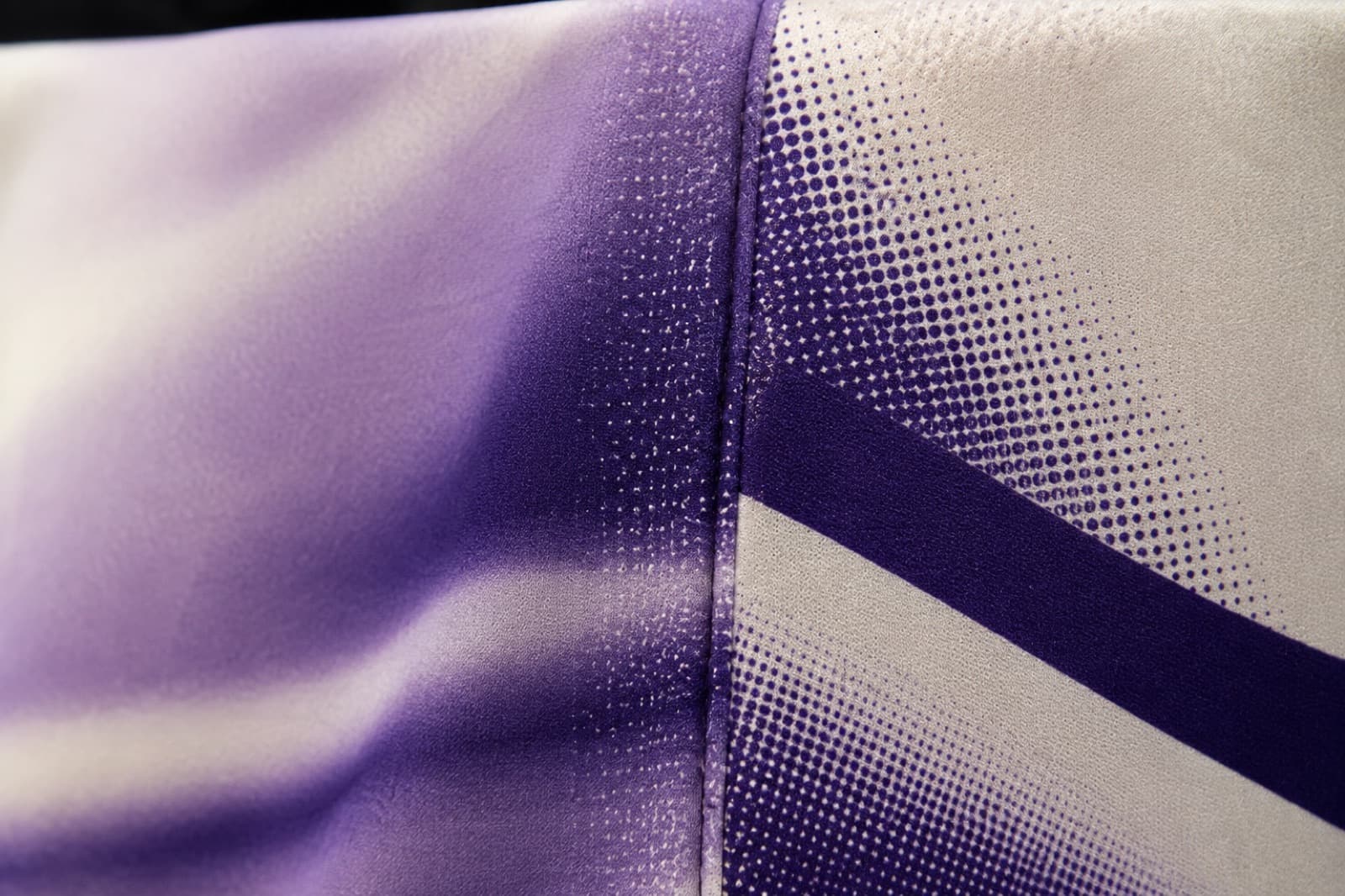
Macro photograph illustrating panel-cut printing on polyester.
D+€18.00 per piece

Panel-cut

The garment is built after printing rather than before it. Pattern pieces go through the press as flat sheets, so the press reaches every millimetre — and the artwork can be made to continue across the seams.

Minimum
12 pcs
Added lead time
+710 d
Blanks
17/38

Seams — Least seam whitening of the four. Each piece is pressed flat before it becomes part of a garment.

Four identical pale polyester panels in a row, each carrying the same violet gradient applied differently: covering the whole panel, a chest rectangle only, chest and back, and assembled from separately printed cut pieces.

Choosing between them

If your artwork has hard edges, fine type or a mark of your own that has to stay sharp, a front panel will serve you better than a full wrap. If it is a gradient, a photograph or a texture, all-over is where sublimation earns its keep. If the piece is going to be looked at closely and the budget runs to twelve or more, panel-cut removes almost every seam problem this process has.

Important — One thing we will not do

We will not sell an all-over print on a blank that cannot carry it — zips, structured crowns and anything under 65% polyester are refused by the configurator rather than accepted and apologised for later. The full list of limits.